
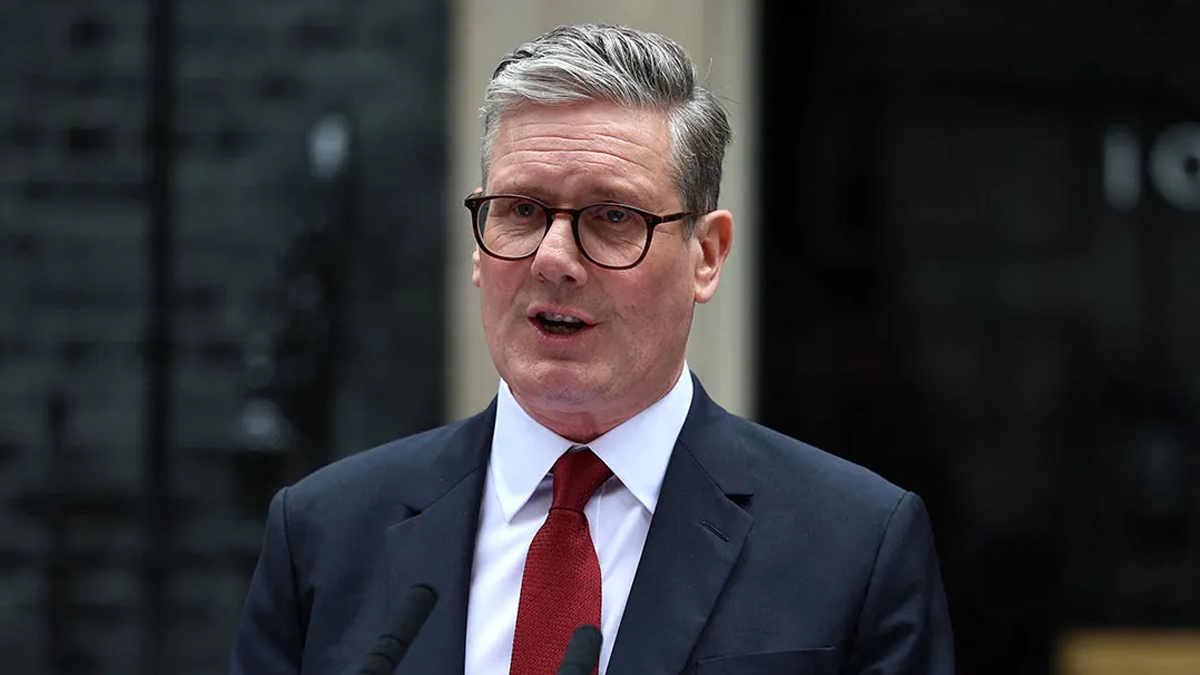
Keir Starmer’s announcement that he will stand down as an MP marks the end of one of the most unusual and turbulent political careers in modern British history. His departure closes a chapter that began with Labour’s crushing 2019 general election defeat, continued through the downfall of three Conservative prime ministers, and ended with Starmer himself resigning as prime minister after a rapid collapse in public support. Whether he leaves behind a meaningful legacy is now a matter of debate.
Starmer entered Parliament in 2015. By the time he became leader in 2020, the party had suffered its worst electoral result since 1935. The 2019 drubbing reshaped Labour’s political identity, exposed fractures between its traditional base and newer supporters, and left Starmer with the task of rebuilding trust in places where Labour had once been dominant. His pitch was simple: professionalism, stability, and a promise to make Labour a party of government again.
In opposition, Starmer’s tenure was defined by his role in the political unravelling of the Conservative Party. He was a central figure in the parliamentary battles that ultimately contributed to Boris Johnson’s downfall, pressing relentlessly on issues of integrity and standards in public life. Johnson’s resignation was followed by the brief and chaotic premiership of Liz Truss, whose economic experiment collapsed within weeks. Starmer capitalised on the turmoil, presenting Labour as the sober alternative. When Rishi Sunak took over, Starmer continued to frame the Conservatives as exhausted and divided, setting the stage for Labour’s return to power.
The 2024 general election delivered Starmer a massive majority, one of the largest in Labour’s history. It was a victory that seemed to confirm his strategy: discipline, caution, and a focus on competence over ideology. Yet the scale of his win also raised expectations that his government struggled to meet. Within months, Starmer’s popularity declined sharply. A series of policy reversals, from green investment to welfare reform, damaged his reputation for steadiness. Critics accused him of abandoning promises, while supporters argued he was adapting to economic reality. Either way, the U‑turns became a defining feature of his premiership.

Short but (not so) sweet Premiership
Starmer’s time as prime minister was short and bruising. His government faced economic headwinds, internal dissent, and a public increasingly frustrated by slow progress on key issues. The rapid decline in his approval ratings created a sense of drift that his administration never fully recovered from. Eventually, the pressure became unsustainable, and Starmer resigned as prime minister, a dramatic end for a leader who had once promised to restore trust in politics.
So what is Keir Starmer’s legacy? It is ambiguous. He rebuilt Labour after its worst defeat in decades, restored its electoral viability, and ended a long period of Conservative rule. He also oversaw one of the largest parliamentary majorities in modern history. Yet his premiership was short, unpopular, and marked by u-turns that left many unsure what he truly stood for.
Perhaps his legacy lies somewhere in between? He proved Labour could win again. He stabilised a party that had been written off. And even if his time in office was turbulent, his impact on British politics is undeniable. Still, whether history will judge him kindly remains an open question.