
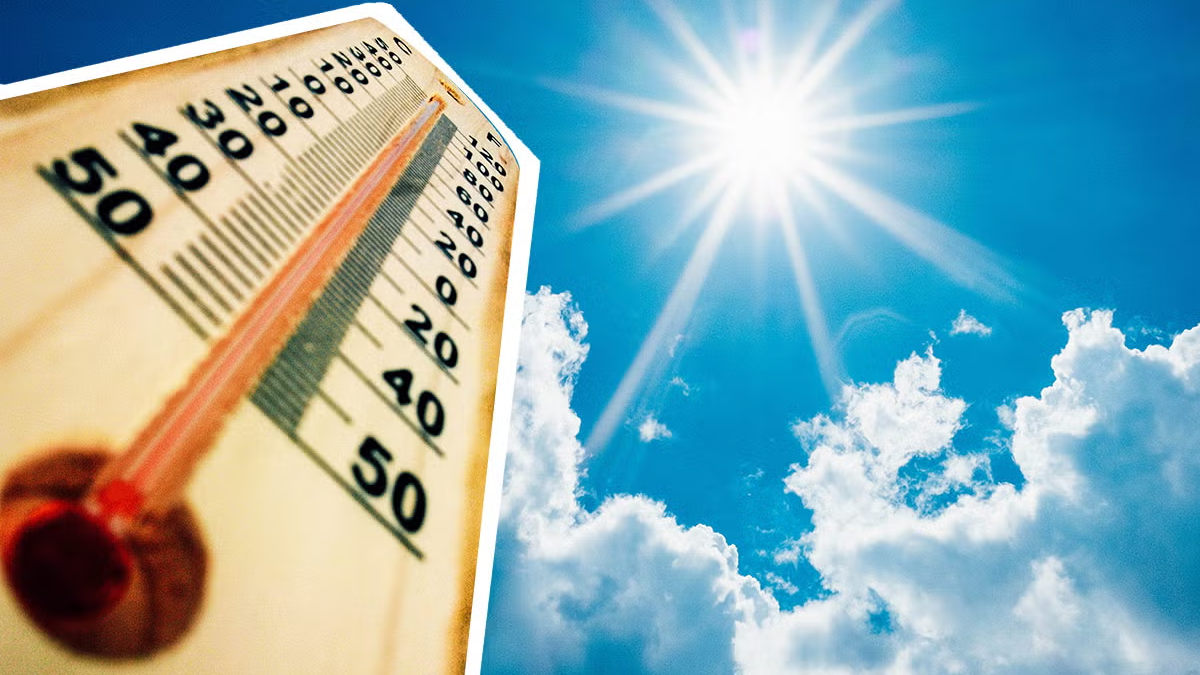
Summer 2026 has become the hottest ever recorded in the United Kingdom, according to new data released by the Met Office. The season registered an average mean temperature of 16.5°C, surpassing the previous record set just last year and marking the warmest season in a dataset that stretches back to 1884. Scientists say the extreme warmth was made around 130 times more likely due to human‑induced climate change.
The record‑breaking summer followed a notable late‑spring heatwave and began with the UK’s second‑warmest June on record, quickly followed by the second‑warmest July. Although late‑August brought more unsettled weather, the sustained heat across the season pushed the national average to unprecedented levels. England, Wales and Northern Ireland all broke their respective summer temperature records, while Scotland recorded its joint‑sixth warmest summer.
Dr Amy Doherty of the National Climate Information Centre said,
The conditions we’ve seen this summer have broken UK climate records once again. These records are now breaking with increasing frequency, reflecting the influence of human-induced climate change on the temperatures we’re experiencing in the UK. Particularly notable is how much we’ve exceeded the previous summer mean temperature record, set just last year. The figures also knock the infamous summer of 1976 down to seventh for average summer mean temperature, with the top five warmest summers all occurring since 2003.
Daily temperatures peaked at 38.1°C at Kew Gardens on 13 August, while Lingwood in Norfolk set a new June record at 38.0°C. In total, 54 Met Office weather stations broke their all‑time daily maximum temperature records during the season.
Climate Change
A rapid attribution study by Met Office scientists found that a summer like 2026 would have been “exceptionally unlikely” in a climate without human‑driven greenhouse gas emissions. Dr Mark McCarthy, Head of Climate Attribution, said that in a natural climate the return period for such a summer would be more than a thousand years. In today’s warming climate, it is now expected to occur roughly once every nine years.
The summer of 2026 has been remarkable and is an example of the extremes we can expect to see more frequently as a consequence of human induced climate change. Our analysis shows a summer like the one we’ve just experienced is now around 130 times more likely because of climate change.
Climate projections suggest that summers will continue to become hotter as global temperatures rise. Dr James Pope, a Met Office climate scientist, said that summer 2026 would be considered “around average” in a world 2.5 to 3°C warmer than the pre‑industrial period. In a 4°C warmer world, he added, this summer would be viewed as cool or below average.
The season was also notably dry. England experienced its driest July on record, and the UK as a whole recorded its third driest July. Although late‑August rainfall prevented new national records for low summer rainfall, totals remained well below average. Sunshine was also abundant, with the UK seeing its sixth sunniest summer on record. England and Wales recorded their second sunniest summers, and Preston Cove House became the first UK weather station to log more than 400 hours of sunshine in a single month.
The Met Office says these conditions align closely with what climate models project for future UK summers: hotter, drier and increasingly extreme