
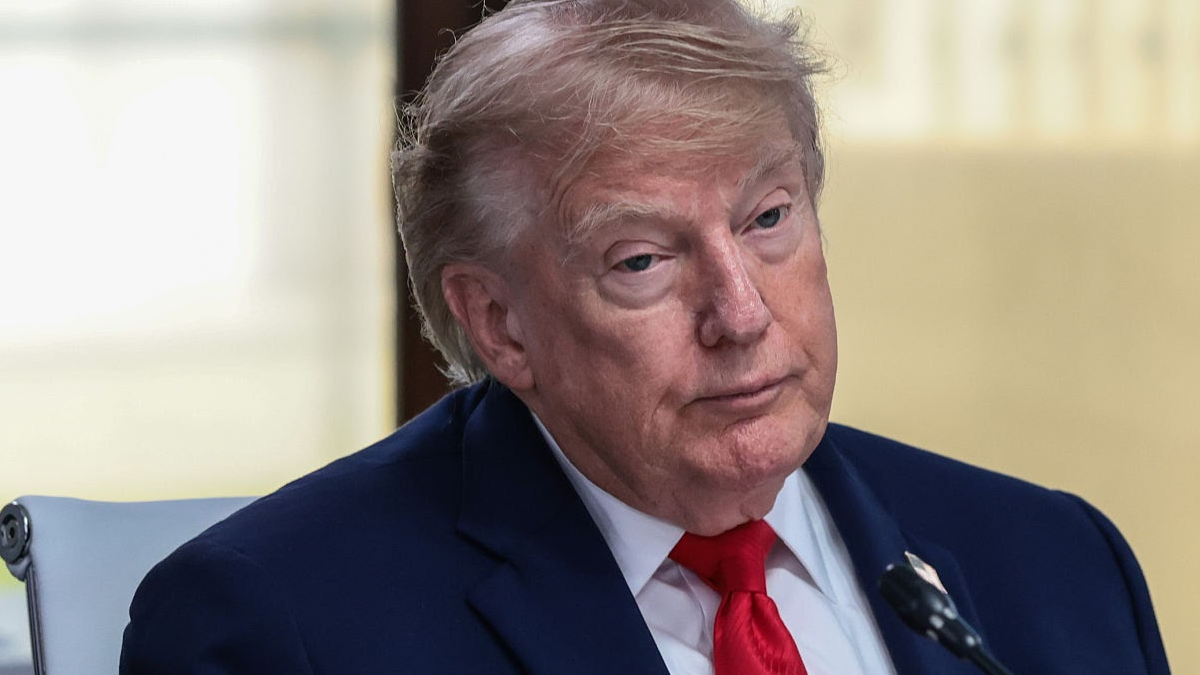
Donald Trump has signalled that the United States may reconsider its long‑standing position on the Falkland Islands, raising fresh tensions between Washington and London at a time when defence spending and NATO commitments are already under intense scrutiny. His remarks, made during an Oval Office appearance, mark the clearest indication yet that the White House is prepared to use the sovereignty dispute as leverage to pressure the UK government into increasing defence expenditure.
Asked whether he was reviewing America’s stance on the islands, Trump replied that he “always review[s] every position” and that the Falklands were “just one of many” under consideration. The Falkland Islands, administered by the UK but claimed by Argentina, have long been a sensitive diplomatic issue. The United States has historically maintained neutrality, recognising Britain’s de facto administration while avoiding taking a formal position on sovereignty. Trump’s comments suggest that neutrality may no longer be guaranteed.
Reports in recent days indicate that senior Pentagon officials have been exploring whether a shift in US policy could be used to encourage Britain to meet NATO’s defence spending targets. According to The Telegraph, Washington has warned that the UK could face “special attention” in a review of allied commitments, with the possibility of opposing Britain’s sovereignty over the islands if defence spending does not increase. This follows claims that the US is pushing NATO allies toward a new era of burden‑sharing, with a target of 5 percent of GDP for defence and security‑related expenditure.
The UK government has responded by reiterating its “long‑standing and unwavering” commitment to the Falklands, stressing that the islands will remain a British Overseas Territory in line with the wishes of the islanders. Argentina, whose president is an ally of Trump, continues to assert its claim to the territory, and recent public displays by Argentine athletes have reignited nationalist sentiment. The dispute remains deeply symbolic for both nations, shaped by the 1982 conflict that left hundreds dead and cemented the islands’ place in British political identity.
Trump’s remarks have sparked alarm among British officials, particularly given the timing. Chancellor John Healey has recently faced questions over whether the UK will meet its previous defence spending commitments, and Trump’s comments appear designed to increase pressure on Prime Minister Andy Burnham’s government. Healey has insisted he is committed to raising defence spending, though he has not confirmed whether the UK will meet the 3 percent GDP target previously discussed.
Speculation about a US policy shift has been circulating for months, fuelled by leaked Pentagon memos suggesting that Washington may use the Falklands issue as diplomatic leverage. Trump’s latest comments now give those rumours new weight. Whether the United States ultimately changes its position remains uncertain, but the political message is clear: Washington expects its allies, including the UK, to increase defence spending, and it is willing to use long‑standing geopolitical disputes to make its point.