
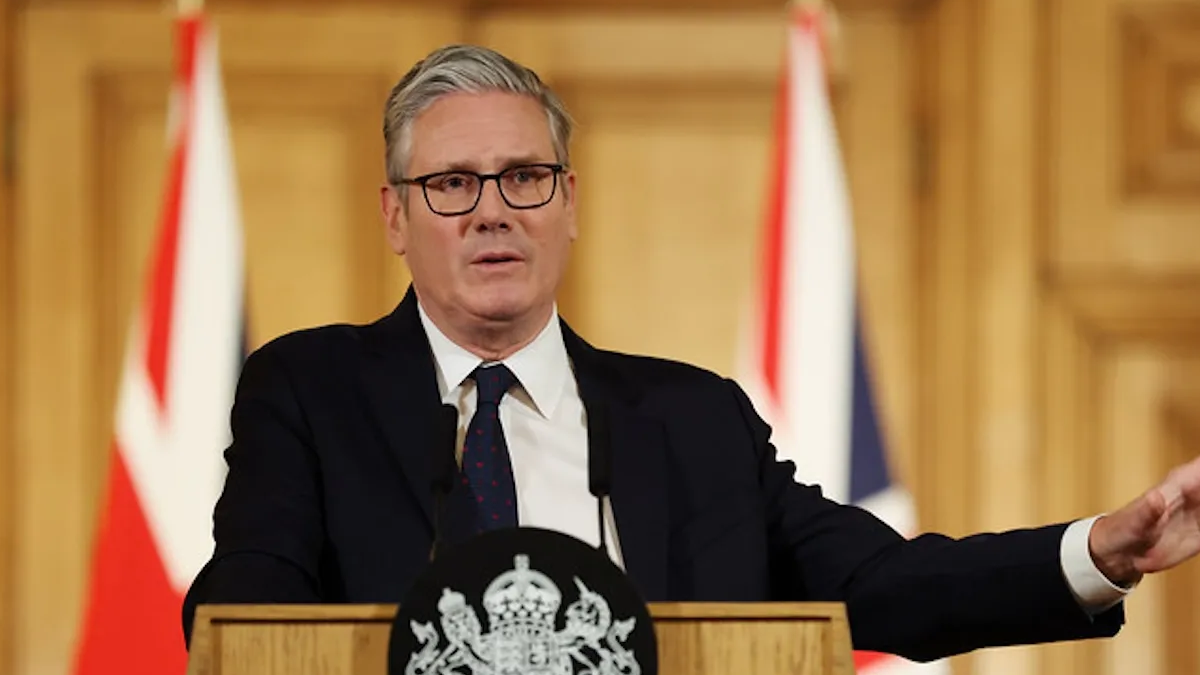
Why did Keir Starmer only last 745 days as PM?
Keir Starmer entered Downing Street promising stability, competence, and a reset after years of political turbulence. Yet his time in office quickly became defined not by the calm he promised but by a series of missteps that steadily eroded his authority.
Three failures stand out: personnel judgment, strategic drift, and a pattern of damaging U‑turns.
The most explosive controversy was the appointment of Peter Mandelson as ambassador to Washington. Mandelson failed his security vetting which triggered a political storm. Starmer assured Parliament that “full due process was followed,” but the public soon learned that officials had ignored crucial warnings. The Foreign Office sacked senior staff, yet the damage was done.
Beyond personnel issues, critics accused S
tarmer’s government of failing to set a clear governing mission. Despite Labour’s landslide victory, insiders described a vacuum at the heart of Downing Street: no coherent strategy, no defined priorities, and no sense of what the administration wanted to achieve. Historians and civil servants noted that Starmer appeared overwhelmed by the sheer breadth of decisions required, leading to drift at precisely the moment his government needed direction.
Compounding these problems was a succession of u-turns. In just 19 months, Starmer’s administration executed more than a dozen major U‑turns — on debt rules, WASPI compensation, winter fuel allowances, and more. Each reversal chipped away at the image of steadiness he had cultivated, creating a sense of a government reacting to crises rather than shaping events.
Taken together, these mistakes formed a narrative that ultimately proved fatal: a leader who could win power, but struggled to wield it once he had it.
[…] time as prime minister was short and bruising. His government faced economic headwinds, internal dissent, and a public increasingly frustrated by […]