
“Neoliberalism has not been kind to the north of England”
Neoliberalism is one of the most contested terms in modern British politics. It is used to describe a set of economic ideas that have shaped the UK for more than four decades, influencing everything from public services and housing to trade policy and the role of the state. To understand why the term carries so much weight, and why figures like Andy Burnham criticise it, it’s necessary to trace its intellectual roots and political evolution.
Origins: The Austrian School and the Rise of Market Fundamentalism
Neoliberalism emerged in the mid‑20th century, drawing heavily on the Austrian School of economics. Thinkers such as Friedrich Hayek and Ludwig von Mises argued that government intervention distorted markets, stifled innovation and threatened individual freedom. They believed that society functioned best when markets were left to allocate resources, prices and labour with minimal state interference.
These ideas were initially marginal. Post‑war Britain embraced a mixed economy, strong trade unions and large public ownership. But by the 1970s, economic stagnation, inflation and industrial conflict created fertile ground for a new economic philosophy that promised discipline, efficiency and growth.
Thatcher, Reagan and the Political Breakthrough
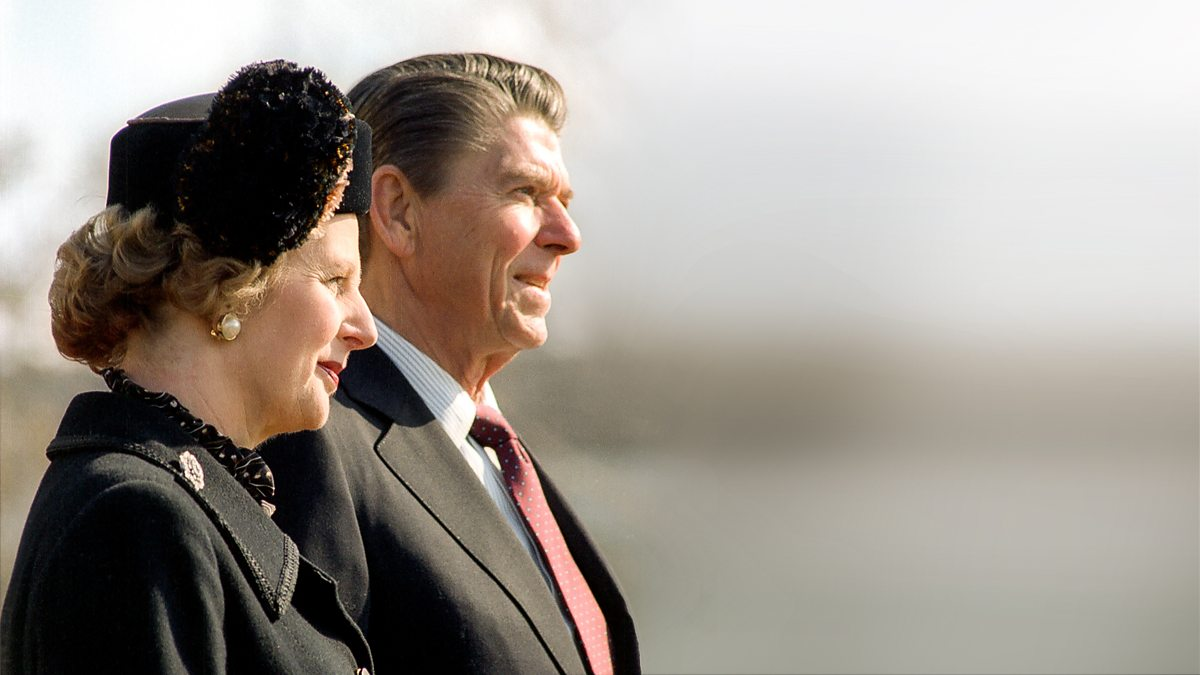
Neoliberalism became politically dominant through the leadership of Margaret Thatcher in the UK and Ronald Reagan in the United States. Thatcher’s governments pursued sweeping reforms: privatisation of state industries, deregulation of finance, weakening of trade unions, and a shift towards competition in public services. The state’s role was redefined into a regulator and enabler of markets.
Reagan implemented similar policies in the US, reinforcing neoliberalism as the Western world’s dominant economic model. Together, they reshaped global politics, embedding the belief that markets were inherently more efficient than governments and that economic growth depended on low taxes, flexible labour markets and private enterprise.
Neoliberalism in the UK Today
Even after Thatcher left office, neoliberal principles remained embedded in UK policymaking. Successive governments – Conservative, Labour and coalition – maintained privatisation, encouraged competition in public services, and embraced globalised financial markets. New Labour softened the ideological edges but kept the core framework: fiscal discipline, market‑driven public service reform and a belief in private‑sector partnership.
Critics argue that neoliberalism has contributed to rising inequality, insecure work, regional imbalance and the erosion of public services. Supporters say it delivered growth, prosperity, modernisation and global competitiveness.
Andy Burnham’s Objections: A Call for a Post‑Neoliberal Settlement
Andy Burnham has become one of the most prominent Labour voices challenging the neoliberal consensus. His objections centre on the belief that market‑driven policy has failed to deliver fairness, stability or long‑term investment, particularly in housing, transport and local government.
40 years of neoliberalism [has] not been kind to the north of England. That system has siphoned wealth out of those places.”
Andy Burnhan, Prime Minister of the UK
Burnham argues that decades of neoliberal policy hollowed out public infrastructure and left communities vulnerable to economic shocks. He has criticised privatisation in areas such as buses and rail, calling for greater public control and long‑term planning. On housing, he has repeatedly argued that market‑led development has not produced genuinely affordable homes, and that the state must take a more active role in building and regulating.
His broader critique is that neoliberalism prioritises short‑term profit over social need, and that Britain requires a new economic model rooted in public investment, stronger local powers and universal services.
A Debate That Defines Modern Britain
Neoliberalism remains central to UK political debate. Whether Britain continues with a market‑led model or shifts towards a more interventionist approach will shape the country’s future — from housing and transport to inequality and regional development.
Burnham’s objections reflect a growing sentiment across the political spectrum: that the neoliberal era may be reaching its limits, and that Britain must decide what comes next.
Post war Britain was a great place to grow up. I went to modern schools and colleges, got a grant and was the first in my family to get a degree. I got two in fact and became a successful professional. All the advantages I had were pulled from subsequent teenagers in the 80’s in a shockingly callous way. I totally agree with the Prime Minister that the North suffered most. I lived in Yorkshire but studied in the South. It has never really recovered from this Londoncentric/home counties neglect. The country was apparently no longer being run for the good of all but only a few. Shame